Diffraction
Diffraction is when waves bend around the corner of an obstacle.
It is most easily seen when a wave spreads out after passing through a gap.
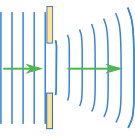
Medium gap: some diffraction, but mostly straight
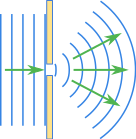
Wavelength-size gap: most diffraction
The maximum effect is when the gap and wavelength are similar in size.
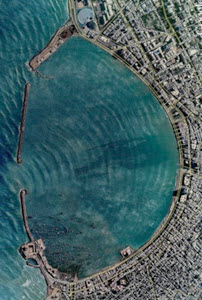
Here we see diffraction as waves enter a harbor:
Diffraction is very important for Radio Waves: it lets them get around hills and into valleys:
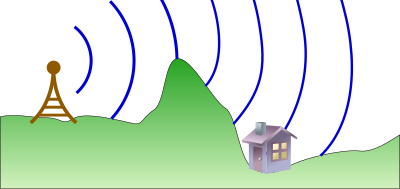
Radio waves with wavelengths of kilometers diffract
over hills and through valleys so you can easily get reception.
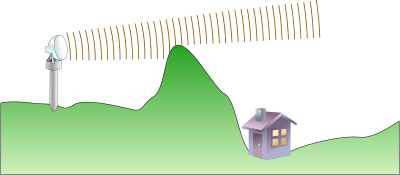
But microwaves with wavelength of centimeters tend to go straight.
Sound vs Light

It is also why we can hear someone talking through an open window when we can't see them.
- Sound waves have wavelengths around 1 meter (close to the size of a window), so they easily diffract and bend around corners
- Light waves have tiny wavelengths (less than a millionth of a meter), so they travel straight through with almost no noticeable bending
What Waves Do
- Diffraction is when waves bend and spread around obstacles or gaps
- Refraction is when waves bend due to changing speed in a new medium
- Reflection is when waves bounce off a surface